
Brief-Article | REPORT SYNDICATION
| 01 | BRICS member states now encompass 45% of the global population, whereas the G7 (comprising the United States, Germany, Canada, France, the United Kingdom, Italy, and Japan) makes up just 10%. |
| 02 | The BRICS nations account for 35% of the world’s GDP, in contrast to the G7, which represents 30%. |
| 03 | BRICS countries contribute roughly 50% of global CO2 emissions, compared to around 21% from the G7. |
| 04 | BRICS has expanded beyond its original five members—Brazil, Russia, India, China, and South Africa. |
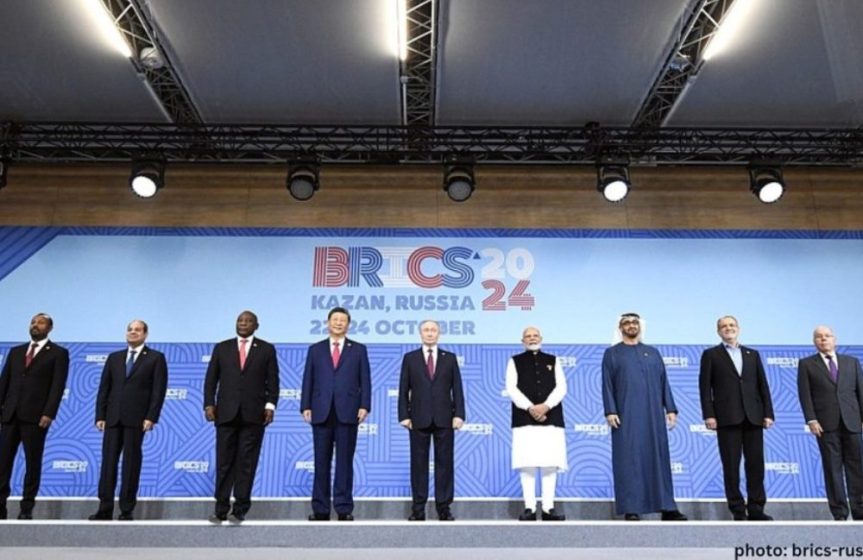
| 05 | The term BRICS+ is now prevalent, as Egypt, Ethiopia, Iran, and the United Arab Emirates officially joined in 2024. |
| 06 | Over 40 countries, including NATO member Turkey and Indonesia, have shown interest in joining. |
| 07 | However, aligning the interests of major players like China, India, and Brazil into a unified strategy is becoming increasingly challenging. Both Brazil and India aim to maintain a “non-aligned” stance. |
| 08 | In contrast, Russia, China, and Iran are eager to challenge the dollar’s status as a reserve currency, seeking to bypass sanctions and offer an alternative to the perceived dominance of the West. |
| 09 | Countries like South Africa and Egypt prioritize economic diversification and amplifying the voice of the Global South while maintaining connections with other powers. |
| 10 | China is striving for political dominance within the BRICS alliance, yet India is emerging as a significant regional power, presenting competition to China’s ambitions with its nuanced strategic approach. |
| 11 | For India, BRICS membership is becoming a delicate balancing act, as it is the only member engaged in direct conflict with the powerful China. |
| 12 | India firmly opposes the anti-Western direction that China, Russia, and Iran wish to impose on BRICS and remains cautious about moving away from the dollar. |
 Report Syndication